
You’re eating the salad, making the smoothie, adding the greens, and choosing the healthy snack. You’re doing what you’ve repeatedly been told is the “right” thing to do.
So why do you feel puffy, tight, gassy, or weirdly uncomfortable by mid-afternoon?
You aren’t doing wellness wrong. A healthier diet can make you feel bloated at first, especially if you make many changes at once. More fiber, more raw vegetables, more protein, more “better-for-you” swaps, and more supplements can all lead to your gut working differently.
The Healthy Food Bloat Is Real

Now, a lot of our so-called “healthy” foods are rich in fiber, fermentable carbohydrates, or ingredients that your gut bacteria just love. And that is usually a good thing. But when you go from low fiber to high fiber quickly, your gut may respond with gas, pressure, and bloating while it adapts.
Some common healthy-but-bloaty foods include:
- Big raw salads
- Beans and lentils
- Broccoli, cauliflower, onions, and garlic
- Apples, pears, and dried fruit
- Protein bars with sugar alcohols
- High-fiber wraps, cereals, or snack bars
- Large smoothies with too many add-ins
- Certain protein powders
Research suggests that bloating can be linked to constipation, gut sensitivity, IBS, small intestinal bacterial overgrowth, and certain fermentable foods. But, if that bloating is persistent, painful, or comes with major bowel changes, it is worth talking to a medical professional (Johns Hopkins Medicine, n.d.).
Why Clean Eating Can Make You Feel Puffy
You Added Too Much Fiber, Too Fast
Now, fiber is not the enemy; your gut very much needs it.
The issue is often how quickly you made the change. Going from toast and coffee to chia pudding, lentils, berries, and a high-fiber bar in one day is a lot.
Try this instead:
- Add one new fiber-rich food at a time
- Increase portions slowly
- Drink more water
- Spread fiber across the day
- Give your gut a week or two before judging
The 2025-2030 Dietary Guidelines for Americans emphasize whole, nutrient-dense foods like protein, vegetables, fruits, healthy fats, dairy, and whole grains, while limiting highly processed foods, added sugars, and refined carbohydrates (US Department of Agriculture and US Department of Health and Human Services, 2026).
The Science of Your Smoothie Is Off
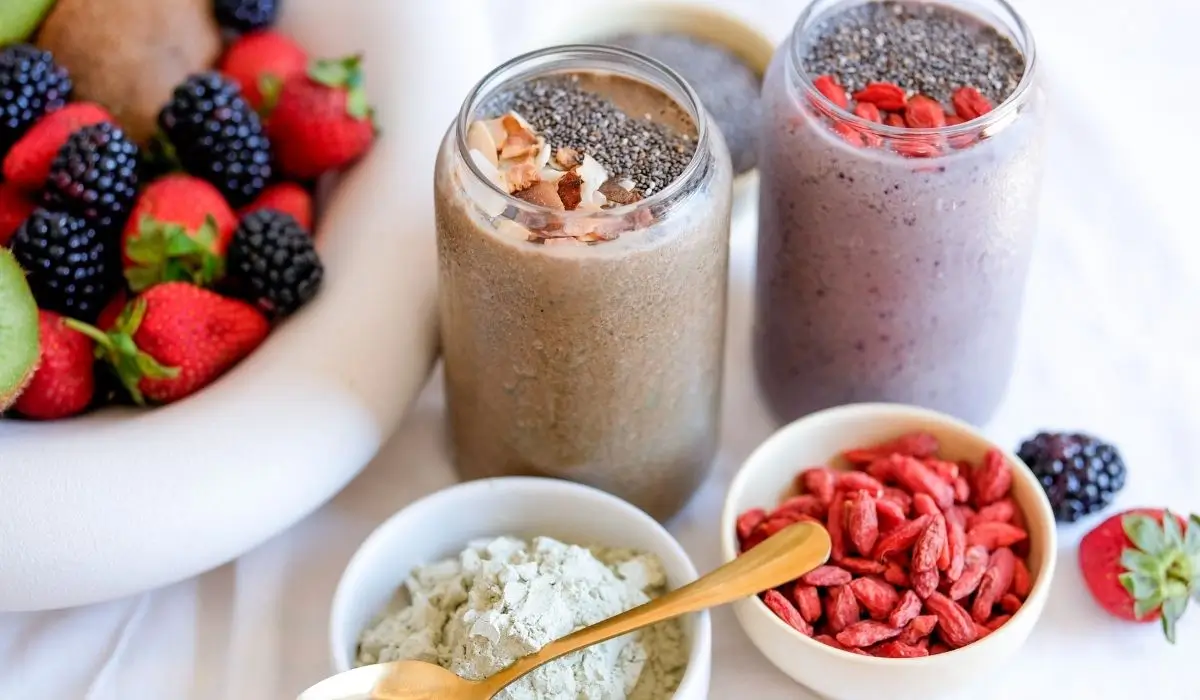
Smoothies can be amazing! However, they can also cause digestive traffic jams.
A puffy-feeling smoothie might include:
- Too much fruit
- Multiple scoops of powder
- Raw greens
- Nut butter
- Seeds
- Added fiber
- Thick yogurt
- Sweeteners
- Not enough liquid
That does not mean that all smoothies are bad, but simplicity often makes for better internal balance.
A smoother smoothie formula:
- One protein source
- One fruit
- One fiber-rich add-in
- Plenty of liquid
- Ice, cinnamon, or vanilla for taste
Avaia™ fits well here because it is designed as a simple daily scoop, not a pile-on product. One 25 g serving provides 10 g of protein, plus fiber, beta-glucan, and a fruit-and-greens blend powered by PichiaProtein+™. It is also vegan, non-GMO, soy-free, dairy-free, and gluten-free.
Your Protein Is Not Sitting Well
Protein is important, but not every protein plays nicely in your body.
Some people feel puffy after consuming protein powders due to lactose, gums, artificial sweeteners, sugar alcohols, large serving sizes, or poorly tolerated plant protein blends. Digestibility is a big deal, and if you cannot comfortably absorb a protein, it may not feel like the healthy choice you expected.
Avaia offers a precision-fermented vegan protein made from whole Pichia yeast, not a yeast extract. The whole yeast helps retain fiber and beta-glucan. Avaia also notes that its protein has digestibility comparable to milk casein and contains all nine essential amino acids.
Try This Before You Blame Your Whole Diet
The 5-Day De-Puff Reset
This is not a detox. Think of it as more of a gentle reset.
For five days, try this:
- Cook vegetables instead of eating huge raw salads
- Keep smoothies simple
- Drink water with fiber-rich meals
- Take a short walk after meals when possible
- Eat more slowly and chew more
- Pause sugar alcohols like sorbitol or xylitol
- Keep protein intake steady, but avoid doubling up on powders
- Track what makes you feel good, not just what looks good
Research continues to show that diet and the gut microbiome are deeply connected, but everyone has a different reaction. Your gut may need time, consistency, and the right types of fiber rather than more restriction (Stanton et al., 2024).
Next Steps?

A healthy diet should not leave you feeling like your waistband is in a fight with your lunch, and Avaia™ was created for that kind of simple daily support.
If your current routine feels heavy, we can help you simplify the morning smoothie without giving up the good stuff!
References
- Johns Hopkins Medicine. (n.d.). Bloating: Causes and Prevention Tips. Available at: https://www.hopkinsmedicine.org/health/wellness-and-prevention/bloating-causes-and-prevention-tips
- Stanton, C., et al. (2024). The Interplay Between Diet and the Gut Microbiome. Nature Reviews Microbiology. Available at: https://www.nature.com/articles/s41579-024-01068-4
- U.S. Department of Agriculture and U.S. Department of Health and Human Services. (2026). Dietary Guidelines for Americans, 2025-2030. Available at: https://www.fns.usda.gov/cnpp/dietary-guidelines-americans
- U.S. Food and Drug Administration. (2024). FDA Finalizes Updated “Healthy” Nutrient Content Claim. Available at: https://www.fda.gov/food/hfp-constituent-updates/fda-finalizes-updated-healthy-nutrient-content-claim


