
Your gut is home to trillions of microbes. Together, they help break down parts of food, produce useful compounds, support the gut lining, and interact with your immune system. When people talk about microbiome diversity, they’re talking about the range of different microbes living in that ecosystem.
If you want to understand why microbiome diversity matters, or how to increase gut microbiome diversity in a realistic way, this guide walks through the basics and the habits most likely to help.
What Microbiome Diversity Means
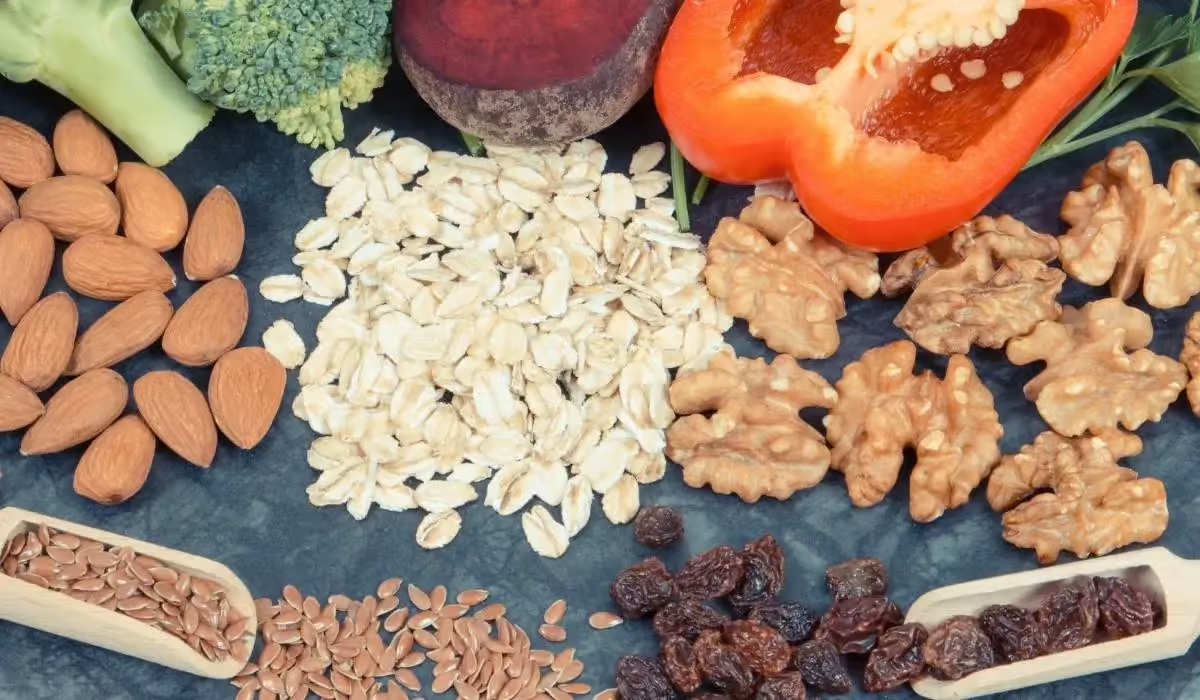
Microbiome diversity is the variety of microbes living in your gut.
Why does that matter? In simple terms, a more varied microbiome is often seen as more resilient. Different microbes do different jobs, so a broader mix may help your gut adapt better to changes in diet, daily stress, and common disruptions like illness or medication use. Research also suggests that eating patterns rich in fiber and minimally processed foods can shift the microbiome in helpful ways over time.
Think of it like a garden. A garden with many kinds of plants is usually more stable than one with only one or two. In the gut, a broader mix of microbes may support more functions, including fiber fermentation, the production of short-chain fatty acids, and resistance to unwanted microbes. Researchers have also found that more diverse microbial communities can improve colonization resistance, making it harder for harmful microbes to take hold.
That does not mean there is one perfect microbiome. Healthy microbiomes can look very different from person to person. What matters more is supporting an environment where beneficial microbes can thrive.
Why Microbiome Diversity Is Important
A diverse gut microbiome is linked to several aspects of digestive and whole-body health.
It May Support Digestive Resilience
A varied microbiome may help your gut handle change more smoothly. That can matter when your routine shifts, your diet becomes less varied, or you need certain medications. Some microbes help ferment fibers your body cannot digest on its own, which can support gut lining health and regularity.
It Is Linked to Better Colonization Resistance
One reason diversity gets so much attention is the need for protection. A 2023 study in Science found that more diverse microbiome communities were better at blocking pathogens by using up available nutrients, leaving fewer openings for harmful microbes to grow.
It Reflects Diet Quality Over Time
Your microbiome responds to what you eat regularly, not just what you eat once. The NIDDK highlighted a 2023 controlled feeding study showing that a diet designed to nourish the microbiome, with more fiber and less processed food, changed microbial composition and diversity while also influencing markers tied to fullness and energy balance.
What Helps Increase Gut Microbiome Diversity

There is no single food that fixes the microbiome overnight. The clearest pattern in the research is consistent variety over time.
Eat More Types of Plant Foods
Different microbes prefer different fibers and plant compounds. That’s one reason variety is so important. Fruits, vegetables, beans, lentils, nuts, seeds, herbs, spices, and whole grains all bring something different to the table.
Try building meals around a mix of:
- Beans or lentils
- Whole grains like oats, brown rice, or quinoa
- Vegetables of different colors
- Fruit
- Nuts and seeds
- Herbs and spices
Whole-food fiber may also matter more for your health than isolated fiber alone. Some researchers suggest that whole-food fibers, which contain combinations of soluble and insoluble fiber, may better support beneficial gut microbes than isolated fibers often added to processed foods.
Add Fiber Slowly and Consistently
Going from very low fiber intake to very high fiber intake in a single day can backfire. If you increase too fast, you may notice gas, bloating, or discomfort. Harvard notes that it is best to increase fiber gradually, and NIDDK also recommends drinking enough fluids to help fiber do its job.
A simple way to start:
- Add one extra plant food to breakfast
- Swap one refined grain for a whole grain
- Add beans or lentils to lunch a few times a week
- Keep increasing slowly instead of trying to change everything at once
Another simple approach is to add just one new plant food each week. Over time, this builds variety without overwhelming your routine.
Add more fiber variety this week by choosing one new bean, one new whole grain, and one new fruit or vegetable. For simple meal ideas, explore easy recipes that make variety feel doable.
Include Fermented Foods if They Work for You
Some fermented foods contain live microbes, and some do not. Yogurt with live active cultures, kefir, kimchi, miso, and sauerkraut may help introduce beneficial microbes. The NIH Office of Dietary Supplements notes that not all fermented foods qualify as probiotics, and not all have proven probiotic benefits, but some can still be useful food sources of live cultures.
A Stanford study found that a diet high in fermented foods increased microbiome diversity and lowered several inflammatory markers over 10 weeks. This doesn’t mean fermented foods are necessary for everyone, but they can be one practical addition if you tolerate them well.
Make Minimally Processed Foods the Default More Often

You do not need a restrictive diet to support your gut. A practical place to start is making minimally processed, fiber-rich foods more common in your routine.
That might look like:
- Oats instead of a low-fiber pastry
- Beans added to grain bowls or soups
- Fruit with breakfast or snacks
- Nuts and seeds added to meals
- More home-built meals and fewer ultra-processed defaults
What to Do Next if You Want to Support Your Gut Microbiome
If you want a realistic starting point, focus on habits you can repeat over time.
A Simple 4-Step Plan
Step 1: Audit your current routine.
Write down how many plant foods you eat in a typical week. Most people repeat the same few foods more than they realize.
Step 2: Add, do not just remove.
Before cutting foods out, add more variety to your plate. Start with beans, oats, berries, leafy greens, nuts, seeds, or whole grains.
Step 3: Go slowly.
Increase fiber over time and drink enough water. If your digestion is sensitive, smaller changes usually work better.
Step 4: Watch the pattern, not the perfect day.
Your microbiome responds to regular habits. A varied week matters more than one perfect meal.
Questions to Ask When Choosing Gut Health Advice
- Does this advice encourage variety, or does it push unnecessary restriction?
- Does it rely on one supplement to do everything?
- Does it explain what to expect and how long changes may take?
- Does it use careful language instead of making cure-all promises?
- Does it point back to sustainable food habits?
When to Get Personalized Support
If you have ongoing digestive symptoms, significant food intolerance concerns, unexplained weight loss, blood in your stool, or worsening symptoms, it is best to talk with a qualified healthcare professional. Microbiome-friendly eating can be part of a healthy routine, but persistent symptoms deserve more tailored care.
Because Avaia includes naturally occurring beta-glucan fiber from whole-precision-fermented yeast, it aligns with your goal of getting certain fermentable fibers into your diet, which can help support a healthier, more diverse gut environment as part of an overall varied diet.
Want a simple next step? Explore gut health resources, practical recipes, and everyday nutrition ideas from Avaia to help you build more fiber variety over time.
Sources
- The Complex Interplay of Diet and the Gut Microbiome Influences Human Health | National Institute of Diabetes and Digestive and Kidney Diseases
- The Microbiome | Harvard T.H. Chan School of Public Health
- Probiotics – Health Professional Fact Sheet | National Institutes of Health Office of Dietary Supplements
- Fermented-Food Diet Increases Microbiome Diversity, Lowers Inflammation | Stanford Medicine
- Promoting Beneficial Gut Microbes With Whole-Food Dietary Fiber | Purdue University
- Microbiome Diversity Protects Against Pathogens by Nutrient Blocking | Science
- Association Between Dietary Index for Gut Microbiota and Metabolic Syndrome Risk | Scientific Reports
- Gut Microbial Metabolites And Immune-Related Diseases | Springer


